
16 November 2022
You are here… according to the realtime data streamed to various devices all over the ship – including the big screen TVs in the cabins.

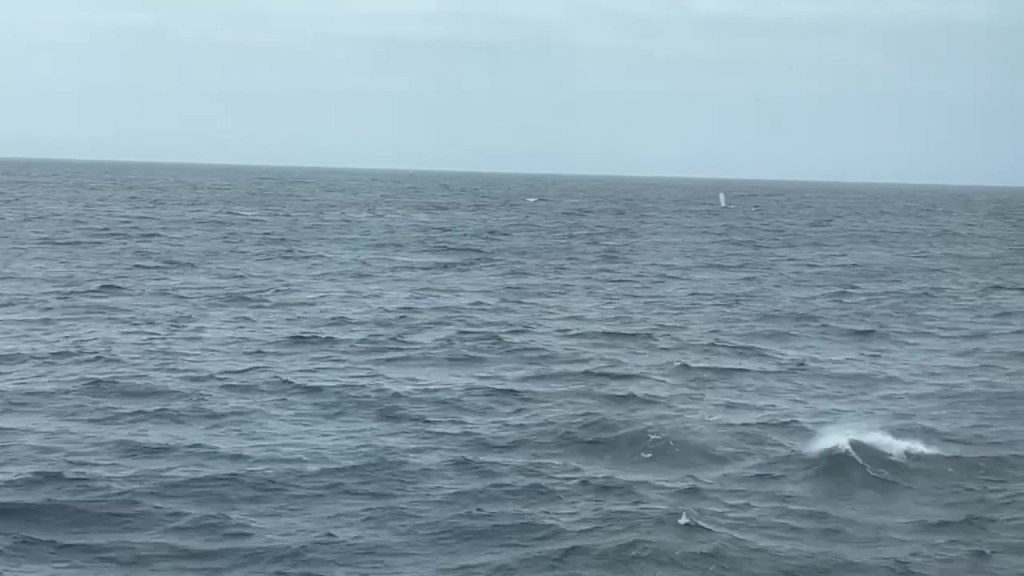
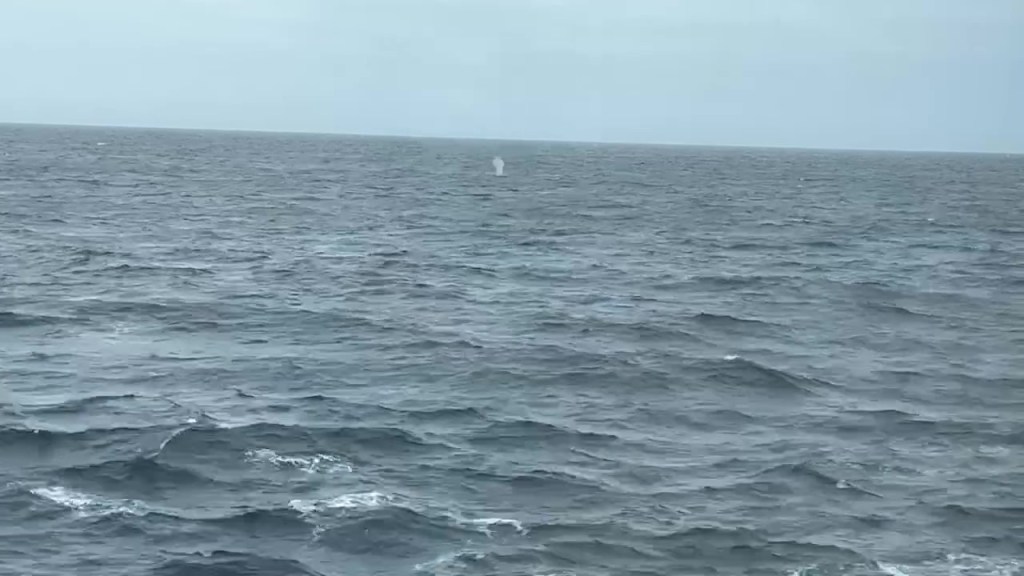
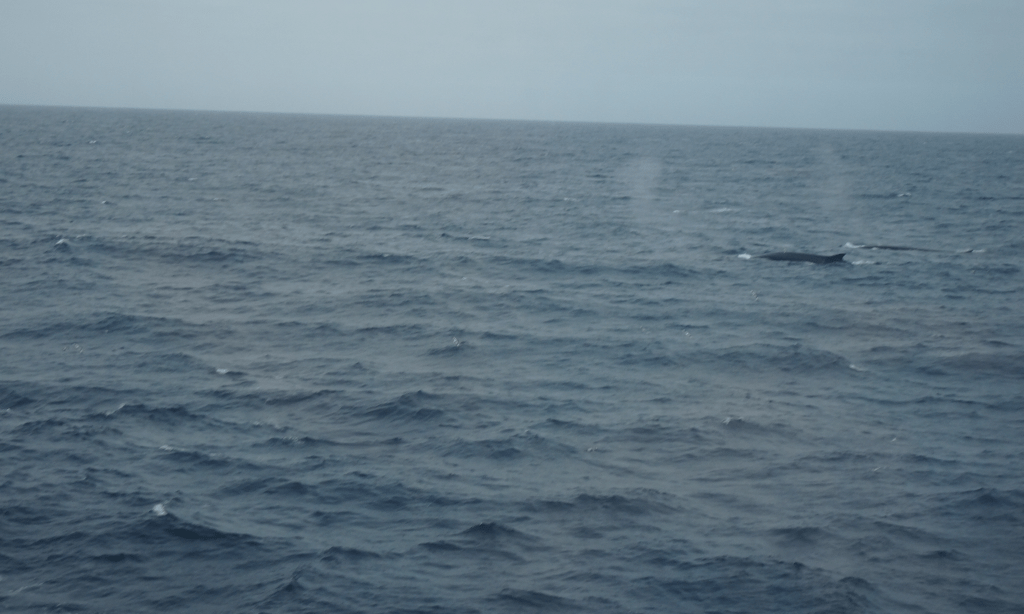
This morning breakfast was ‘interrupted’ by a myriad of puffs visible from the panoramic windows of the Aune restaurant.
General excitement and disbelief. Me not wanting to miss a thing, but also dying to be a fly on the wall up at the Whale Sensus station on the Bridge….
We were surrounded by a 200+ pod of Fin and Sei whales. This was highly irregular and the scientists went well …whale.


Today’s jam-packed Sea Day schedule:
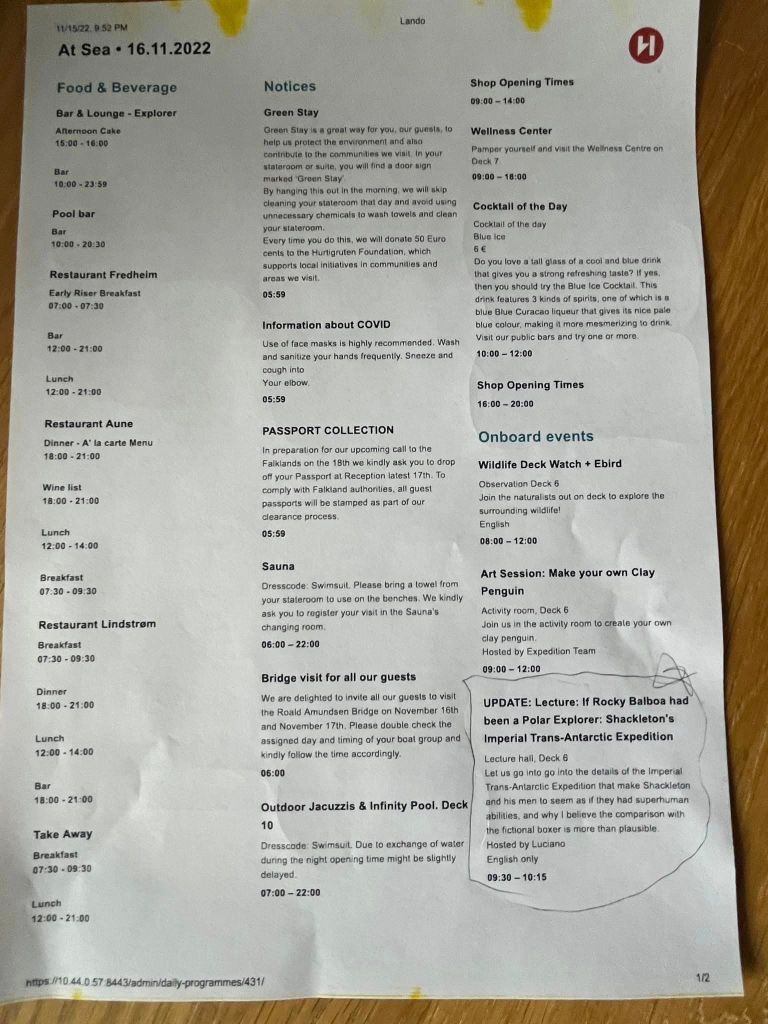
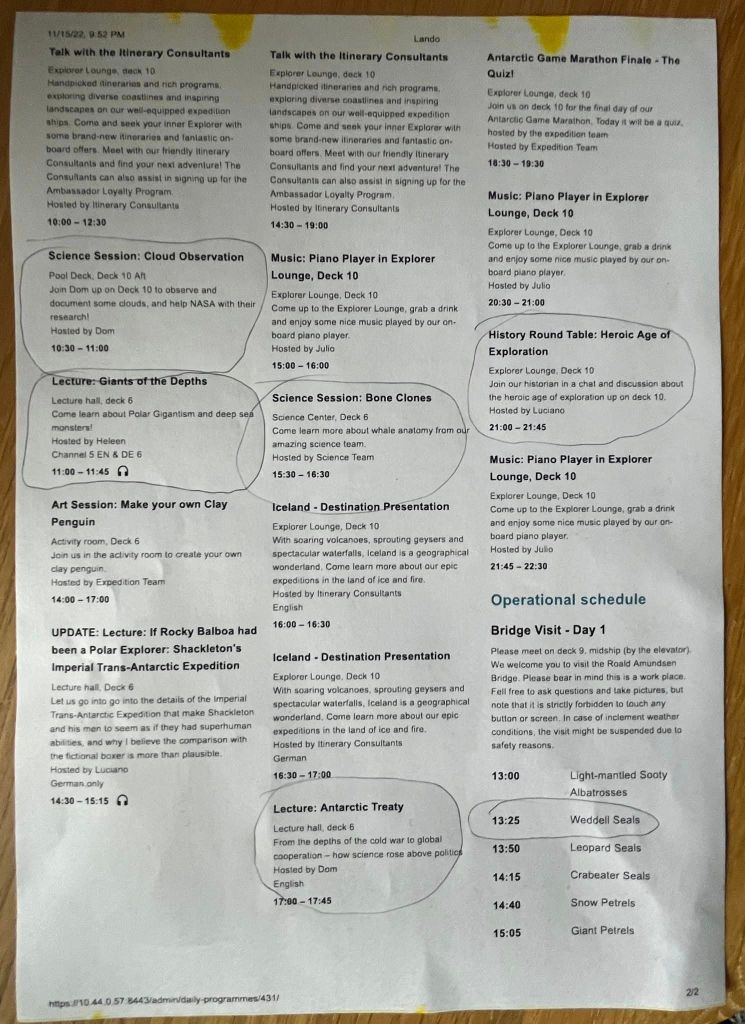
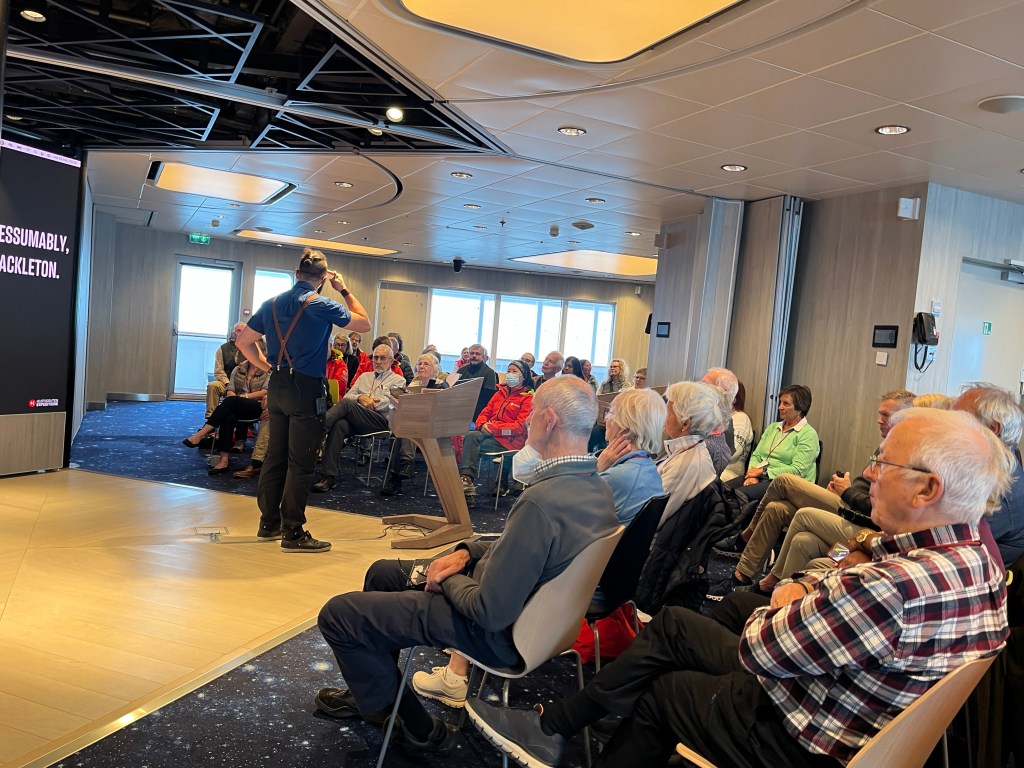
First up was Luciano’s lecture on Shackleton’s Imperial Transatlantic Expedition. He had some interesting parallels between Shackleton’s crew and Rocky Balboa.

If I remember correctly today I actually joined Dom on Deck 10 next to the pool for Cloud Obervation and data upload to NASA’s Globe Obeserver app. You can find the link to download the app on Google Play Store or Apple here – if you want to participate and submit data for your location.
Register an account and the app will walk you through the process – you basically become NASA’s eye on the ground supplementing what the sattelite provides from above with what you literally see as the sattelite moves over – the app instructs you to take pictures (outside obviously) – up, down, left and right at a certain time that corresponds closely to when a sattelite is overhead.
I did not “Connect with my inner Penguin” to get creative and make a clay penguin.
Heleen hosted “Giants of the Depths” lecture introducing the guests to the various giant creatures that live in the REALLY REALLY deep parts of the ocean.
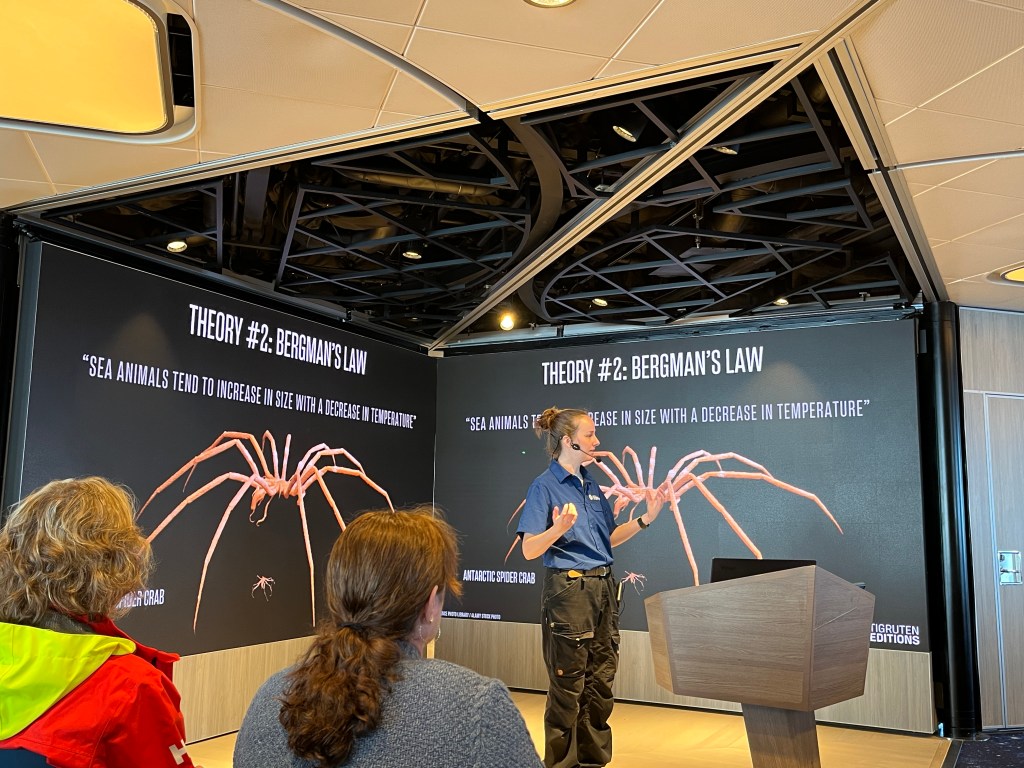
This also included the Giant Squid that live in these waters.
“The Colossal Squid (Mesonychoteuthis hamiltoni) is the largest cephalopod in the world, surpassing even the mighty Giant Squid (Architeuthis dux). It also boosts the largest eye in the animal kingdom. This massive squid can reach up to 46 ft. (14 m) but some believe it can grow even bigger! The Colossal Squid is known to live in the deep waters around Antarctica, but little is known about the true extent of its range and habitat. Despite its massive size, it has one predator, the equally impressive Sperm Whale (Physeter macrocephalus). it was first described in 1925 when parts of the animal were found in the stomach of a sperm whale. A live specimen was caught by a fishing vessel in 2007. Like most squid it has 8 arms and 2 tentacles, but it is the only species to have rotating hooks inside its suction cups, which it uses to grab on to prey.” – Source “Infographic Post by Peppermint Narhwal Creative“
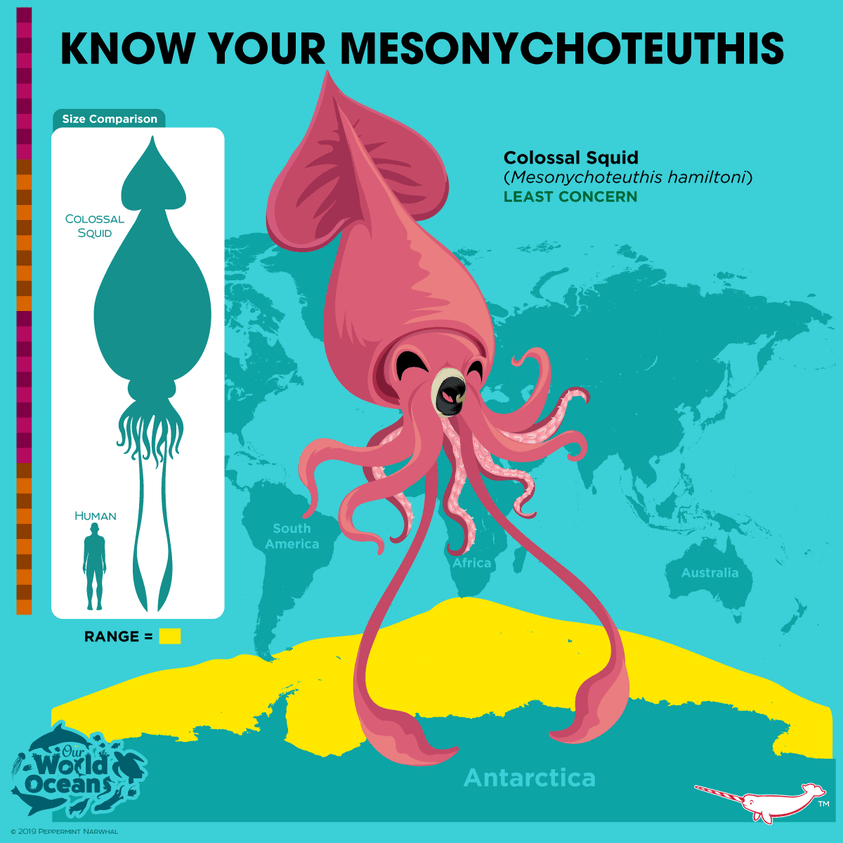
Maru informed the group that there are two specimens in museums in Argentina – One being in the Natural History Museum in Buenos Aires. This immediately got added to my “Must see list”
I did eventually make the ‘pilgramage’ in March the following year…


Heleen closed out the lecture with a tribute to one of the foremost female marine biologists, oceanographer and National Geographic Explorer Dr Sylvia Earle.
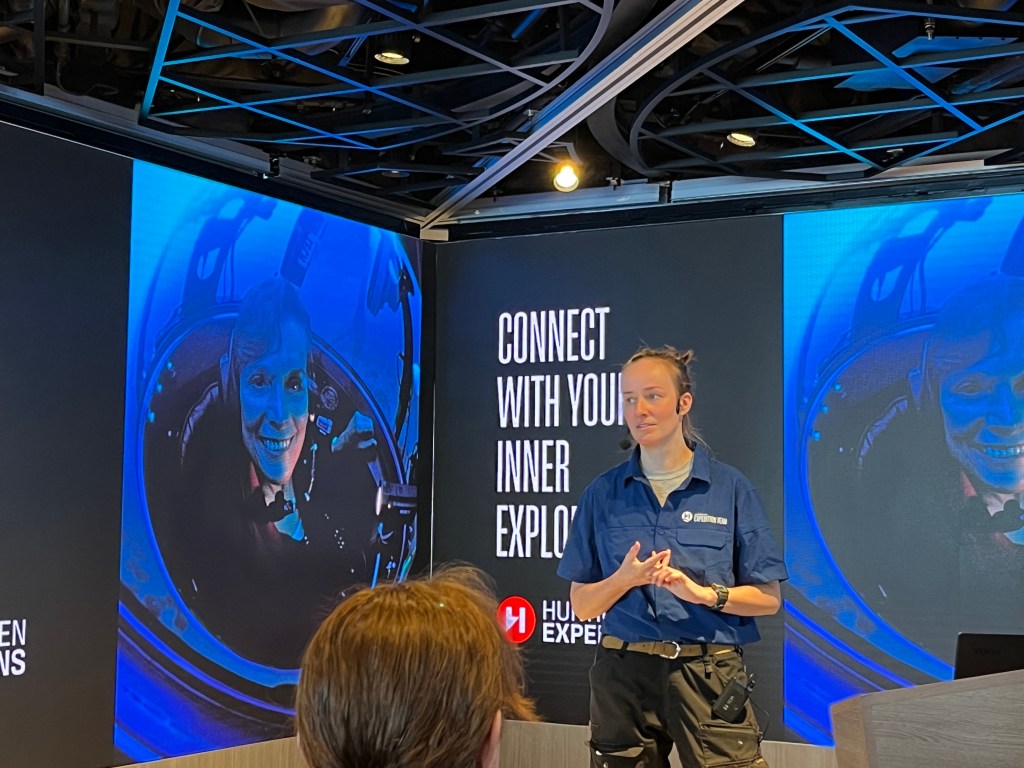
After lunch the Weddell Seals were scheduled for a visit to the Bridge. This was very interesting and hi-tech. Great to see some of the screens I see when I look up from my balcony – in context.
No seasickness experienced so far, but man does that medication make my drowsy.
Closed out the day with the “Cocktail of the Day” in the Explorer Lounge.
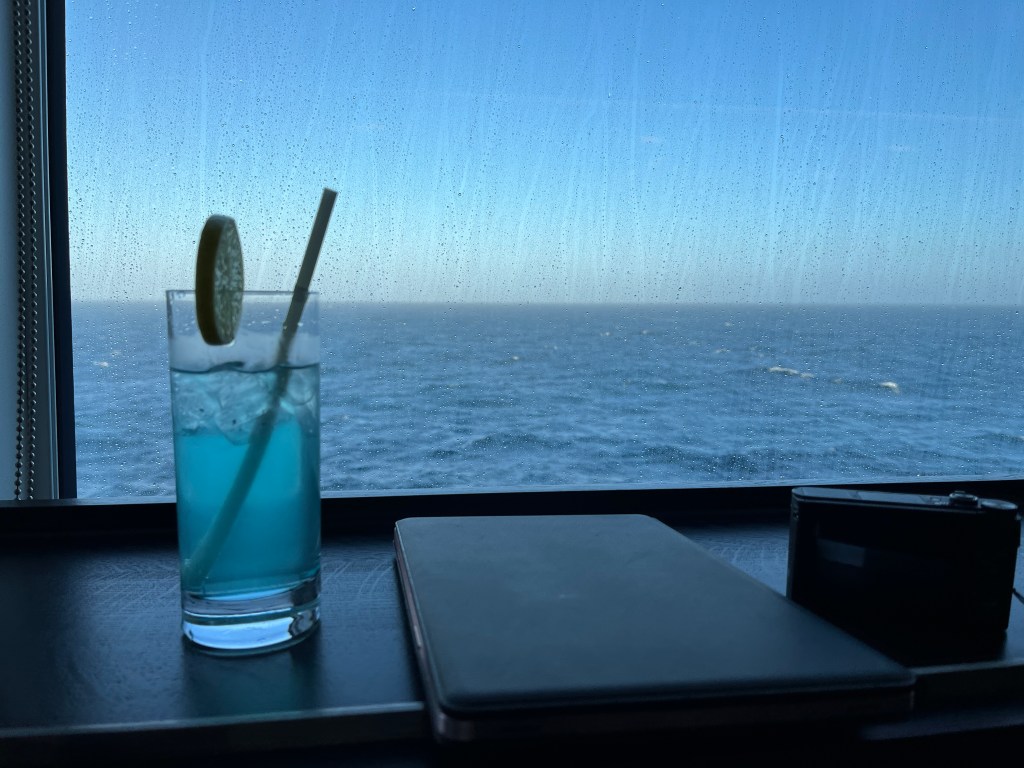
Tomorrow would be another “Sea day”… so far, so good!
 Temple & Iceberg Trails: A Journey Through Asperger's